
Losing a tooth isn’t just cosmetic. It affects how you eat, speak, and feel when you smile. Maybe you’ve been living with a gap for a while, or maybe you just had a tooth removed, and now you’re facing a decision you never expected to make. Either way, you’re probably hearing three words over and over: dental implants and bridges.
Both replace missing teeth. Both could restore your smile. But they work completely differently, and the right choice depends on your situation. Let’s break it down so you can walk into your consultation feeling informed, not overwhelmed.
How Dental Implants Work
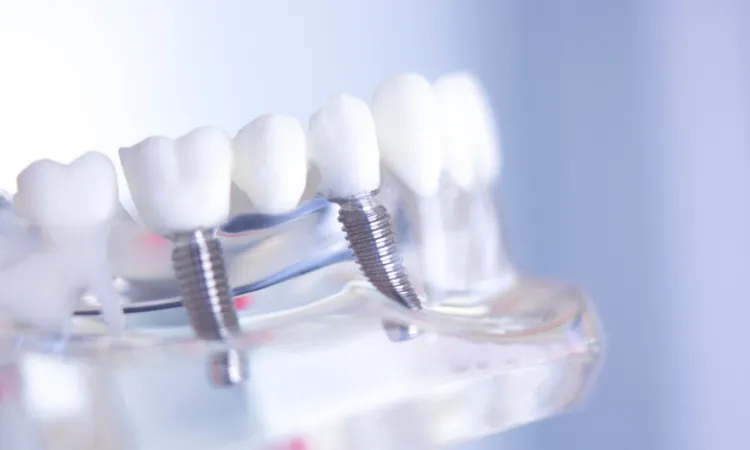
Think of an implant as an artificial tooth root. It’s a small titanium post that a surgeon places into your jawbone. Over the next few months, your bone fuses with that post, a process called osseointegration. Once that bond is solid, we attach a custom crown.
That fusion means the implant acts like a real tooth root. It stimulates your jawbone the same way your natural tooth did. That stimulation helps prevent bone loss over time, a problem that happens when a tooth is missing for too long.
Implants also stand alone. They don’t rely on neighboring teeth for support. That means we don’t have to modify healthy teeth to make room.
The tradeoff? Implants take time. From start to finish, the process can take several months. And it’s a surgical procedure, so it’s not for everyone. Patients need adequate bone density and good overall health for the best results.
How Dental Bridges Work
A bridge is exactly what it sounds like. It “bridges” the gap where a tooth is missing. The replacement tooth, called a pontic, is anchored to the crowns on the healthy teeth on either side.
Bridges are faster than implants. In many cases, the whole process takes just a couple of weeks. There’s no surgery, no healing period, and no waiting for bone to fuse.
They’re also a solid option when the neighboring teeth already need crowns. If the teeth on either side of the gap are already compromised, crowning them for a bridge makes practical sense.
But there are downsides. To place a bridge, we have to reshape those healthy neighboring teeth. That’s irreversible. And because the bridge sits above the gumline, it doesn’t stimulate the jawbone underneath. Over time, that can lead to bone loss in the gap area.
Bridges also tend to need replacement sooner than implants. Most last 10 to 15 years with good care, while implants can last decades.
So Which One Is Right for You?
This is where we move from general terms to you. A few factors we consider:
- Bone health: If you’ve lost significant bone density, you may need a bone graft before an implant. Sometimes a bridge is the more practical path.
- Your health history: Certain conditions, such as uncontrolled diabetes, smoking, or a weakened immune system, can affect implant healing. We’ll go over your history together.
- Age and lifestyle: Younger patients often choose implants because they last longer. Older patients sometimes prefer the faster, less invasive route of a bridge.
- Budget: Implants typically cost more upfront, but they last longer and require fewer replacements. Bridges cost less initially but may need to be redone sooner.
- Neighboring teeth: If the teeth beside the gap are healthy, preserving them with an implant makes sense. If they’re already compromised, a bridge might be the smarter move.
What We Tell Every Patient
There’s no universal right answer. Anyone who tells you implants are always better, or bridges are always the way to go, isn’t looking at your specific situation.
At Southern Pines Family & Cosmetic Dentistry, we look at your whole mouth, your health history, and your goals. Then we lay out the options honestly.
Let’s Talk It Through
If you’re missing a tooth and don’t know where to start, call us. We’ll examine your smile, answer your questions, and help you choose the path that fits your life.
Call Southern Pines Family & Cosmetic Dentistry today at 910-390-1259 or request an appointment online. Your smile deserves a plan built around you.